марта 2017

University Council

Address: South Ural State University Office 915a, Main University Building 76, Prospect Lenina Tel.: +7 351 267 91 23 E-mail: council@susu.ru The University Council is the executive body of the University governance system The University Council is in charge of the following tasks: Regulation of University conferences; Regulation of University development directions including its academic and scientific activities; Legislative regulation of the educational process, including the enrollment process, academic schedules, student academic performance control and examination, student expulsion and program change, study breaks, suspension or termination of the University-student relations; Approval of the University Development Program; Annual Rector’s reports hearings; Regulation of educational, research, informational, financial, and international activities of the University; Regulation of the implementation and functioning of University academic programs in accordance with the law; Approval of the University Council work plan; Regulation of the procedure of awarding academic ranks to the University staff; Performance regulation of University structural units responsible for educational and scientific activities except for University branches; Regulation of policies for educational and scientific divisions, faculties, and other departments responsible for student teaching and created on the basis of other organizations; Regulation of reports of the Heads of University structural units; Regulation of the establishment of the Supervisory Board, its members and work plan Regulation of University staff acceptance for national awards of the Russian Federation and honorary degrees; Awarding University honorary degrees on the grounds of statements approved by the University Council; Regulation of policies on University student scholarships; Nomination of students for Presidential scholarships and scholarships of the Government of the Russian Federation, and other scholarships; Regulation of annual teaching schedules for academic staff; Regulation of the issue of University diplomas and certificates to students who successfully pass the State Final Examination; Election of the University President; Regulation of other activities of the University Council in accordance with the law of the Russian Federation, the University Charter, and other local normative acts.

Supervisory Council

Appointed by the Ministry of Education and Science of the Russian Federation No. 1414 of November 14, 2016. In accordance with the Federal Act №174-FL of November 3, 2006 "On Autonomous Institutions" and the University Charter, the Supervisory Council was established at South Ural State University – the supervisory committee of the University. The order assigning the Supervisory Council members was signed by the Minister of Education and Science of the Russian Federation O.I. Vasilyeva on November 11, 2016. The Supervisory Council is responsible for the regulation of financial and economic activities of the University, asset management, participation in other legal entities, and other spheres. The term of office for the Supervisory Council is 5 years. Supervisory Council Members: Victor Khristenko The President of the Business Council of the Eurasian Economic Union Andrey Boginskiy General Director of Russian Helicopters Arseniy Brikin Deputy General Director of Ruselectronics Alla Vychkovich Executive Director for Personnel and Social Policy of Roscosmos German Vyatkin Doctor, Professor, Corresponding Member of RAS Vladimir Gutenev First Deputy Chairman of the Russian Engineering Union Oleg Sienko  First Vice President of Russian Copper Company Alexandr Sobolev  Director of the Department of State Higher Education Policy of the Ministry of Education and Science of the Russian Federation Alexandr Chumikov  General Director of the International Press Club. Chumikov PR & Consulting  

МООК в ЮУрГУ: новый формат образования будущего


Еще в 2014 году ЮНЕСКО назвала Массовые открытые онлайн-курсы (МООК) в числе 30 перспективных тенденций развития образования до 2028 г. Уже сегодня на мировых площадках можно найти открытые курсы практически по любому запросу пользователя интернет.

Elite Education at SUSU: We’re Raising Leaders!


In the fall of this academic year work began at South Ural State University work began at the SUSU Center of Elite Education for high-achieving students who try to realize their intellectual potential to the maximum. The project was realized within the 5-100 Russian Academic Excellence Project.

V этап (23 октября 2015 года – настоящее время)

В октябре 2015 года Южно-Уральский государственный университет вошел в число высших учебных заведений России, отобранных для участия в Проекте 5-100, целью которого является максимизация конкурентной позиции группы ведущих российских университетов на глобальном рынке образовательных услуг и исследовательских программ. Стратегическая цель ЮУрГУ в Проекте 5-100 – формирование исследовательского и предпринимательского университета мирового уровня, ориентированного на достижение позиций глобального лидера в области суперкомпьютинга, инжиниринга, естественных наук и наук о человеке. Данная цель предполагает получение места в числе Топ-100 по основным международным рейтингам (THE или QS), а также в предметных рейтингах по компьютерным наукам, аэрокосмическому инжинирингу и материаловедению. Достижение поставленной цели детализируется следующими стратегическими целями второго уровня в рамках трех направлений: Стратегические цели по направлениям Направления Стратегические цели Образование Стать мировым лидером образования в области суперкомпьютинга и аэрокосмического инжиниринга; Интегрировать студентов и преподавателей в международный образовательный процесс посредством значительного повышения их международной мобильности. Наука Вывести научную деятельность университета на мировой уровень в отношении результативности научных исследований; Добиться прорывов мирового уровня по приоритетным направлениям исследований. Управление, финансирование и инфраструктура Стать коммерчески успешным, признанным в мире инновационным лидером; Обеспечить диверсификацию источников финансирования университета; Довести уровень внутренней операционной эффективности до уровня ведущих мировых университетов; Создать благоустроенный кампус, соответствующий мировым стандартам; Повысить качество сервисных функций вуза для студентов и персонала до мировых стандартов. В 2016 году Университет начал реализацию мероприятий Дорожной карты – Программы повышения конкурентоспособности университета в глобальном образовательном пространстве. Одна из важнейших задач Программы – создать современную эффективную структуру вуза в соответствии с международными стандартами и лучшими практиками. В результате в ЮУрГУ были сформированы 10 высших школ и институтов: Архитектурно-строительный институт, Высшая медико-биологическая школа, Высшая школа экономики и управления, Высшая школа электроники и компьютерных наук, Политехнический институт, Институт лингвистики и международных коммуникаций, Институт спорта, туризма и сервиса, Институт естественных и точных наук, Институт социально-гуманитарных наук, Юридический институт. В 2016 году Южно-Уральским государственным университетом была проделана серьезная работа по внедрению мер поддержки молодых ученых. Состоялось 4 открытых конкурса для исследователей, по результатам которых материальную поддержку получили 30 молодых ученых, 30 аспирантов и 20 студентов. Кроме того, для работы над проектами в рамках реализации дорожной карты университета в Программе 5-100 в качестве руководителей были привлечены молодые специалисты, чей средний возраст составил – 37 лет. Осенью 2016 года в ЮУрГУ были созданы новые коллегиальные органы управления вузом: Международный научный совет и Наблюдательный совет. В состав первого вошли 10 ведущих мировых ученых во главе с международным экспертом в области инноваций в промышленности, президентом корпорации «Эмерсон» Эдвардом Л. Монсером. Целью Международного научного совета является координация научно-исследовательской и образовательной деятельности университета в соответствии с лучшими мировыми практиками. 9 декабря 2016 года состоялось первое заседание Наблюдательного совета, членами которого стали 11 ведущих российских экспертов в области промышленности и представители правительства, его председателем является Виктор Борисович Христенко – Президент Делового совета Евразийского экономического союза.К компетенции Наблюдательного совета относится рассмотрение важнейших вопросов, касающихся финансово-хозяйственной деятельности вуза, распоряжения имуществом, участие в других юридических лицах и многих других сторон жизни и деятельности университета. Огромное внимание в 2016 году было уделено внедрению системы проектного менеджмента, которая призвана повысить эффективность работы сотрудников и результативность проектов. Для этого руководством ЮУрГУ были сформированы четкие критерии оценки эффективности проектов и поощрений сотрудников, внедрена система KPI. В текущем периоде заметно повысился средний показатель цитируемости и качество публикационной активности сотрудниковуниверситета. Труды ученых ЮУрГУбыли размещены в авторитетных научных изданиях всего мира. Университет ведет активную работу по подготовке массовых открытых онлайн курсов, которые впервые в истории университета запущены на открытых образовательных площадках Лекториум и EdX. Для более эффективного обучения студентов с высокими результатами в учебе в ЮУрГУ созданы 14 групп элитной подготовки. Талантливые студенты получают возможность более глубоко изучать фундаментальные и смежные дисциплины, принимают участие в междисциплинарных научных исследованиях. Программы элитного обучения бакалавров составлены с привлечением представителей бизнеса, промышленности, СМИ и пр. В 2016 году Южно-Уральский государственный университет заключил ряд соглашений о стратегическом партнерстве с крупнейшими мировыми и российскими корпорациями. Так в июле был подписан меморандум с компанией Siemens, в декабре – договор о стратегическом партнерстве с государственной корпорацией в области ракетостроения «Роскосмос». Такая целенаправленная работа по повышению качества образования позволяет университету обеспечивать экономику региона малыми инновационными предприятиями, современными инженерными решениями и высококвалифицированными специалистами.   

A New Window to Europe: Selection Opens for the Academic Mobility Program at a University in the City of Nitra


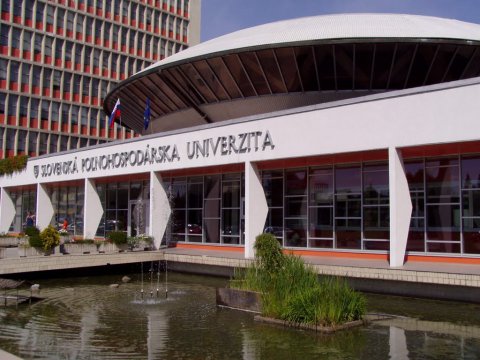
South Ural State University, the Erasmus+ program, and the Slovak University of Agriculture in the city of Nitra are inviting SUSU students, professors, and staff to take part in the contest program of academic mobility. Take note, the grant includes coverage of airfare, education, and living costs.

Новое окно в Европу: открыт набор на программы академической мобильности в университет города Нитра


Южно-Уральский государственный университет, программа Erasmus + и Словацкий Сельскохозяйственный Университет в городе Нитра приглашают студентов, преподавателей и сотрудников ЮУрГУ принять участие в конкурсной программе академической мобильности. Обращаем ваше внимание на то, что грант включает в себя покрытие расходов на авиабилеты, обучение и проживание.

International Scientific Council

International Scientific Council was established at SUSU to coordinate science and research in accordance with the best world practices. Establishment of the Council is one of the most important initiatives under the University Roadmap. The Council members are the leading scientists with rich research experience in fundamental and computer sciences, engineering and medicine:  Prof Ashokkumar Muthupandian; Prof Panayotis A. Koutentis;  Prof Ron de Kloet; Prof María Josefa Yzuel; Prof Jaewan Kim; Dr Mohammed Milad; President and CEO of SMS group Inc., USA. a Prof at the South Ural State University Pino Tese, Prof., Dr. Victorino Franco, Prof. Fei Tao, President of Emerson Corporation Michael Train, Prof., Dr. Andrew B. Cundy. President of Emerson Corporation Michael Train Michael Train became president of Emerson in October 2018. In this role, he drives the company’s focus on software and digital technology development, major investments, international growth and global shared service organizations. In addition, he serves as chairman of Emerson’s Automation Solutions business and is a member of Emerson’s Office of the Chief Executive, which helps develop and guide the company’s global business strategies. Prior to his current role, Train served as executive president of Emerson’s Automation Solutions business, managing strategy and operations for one of the company’s two business platforms. In this role, Train directed two strategic programs – Project Certainty and Operational Certainty – to help companies reduce costs and timelines and drive more efficiencies into projects and ongoing operations. He has been instrumental in developing Emerson’s digital transformation initiative that provides strategies and an actionable roadmap for customers to leverage new digital technologies for improved business performance. Train began his career at Emerson in 1991, starting as an international planner before serving in several Asia-Pacific and strategic business planning roles including vice president of planning and development for Asia-Pacific, corporate vice president of planning and international, president of Emerson in Japan and Korea and president of Emerson Process Management Asia-Pacific. Train currently serves on Cornell University’s Samuel Curtis Johnson Graduate School of Management Advisory Council, the U.S.-India Strategic Partnership Forum Board of Directors and was a 2008 Eisenhower Fellowship recipient. Train holds a bachelor's degree in electrical engineering from General Motors Institute and a master’s degree in business administration from Cornell University      President and CEO of SMS group Inc., USA. an Honorary Professor at the South Ural State University Pino Tese Pino Tese is a Professor at the South Ural State University, President and CEO of SMS group Inc., USA. Since 1975 he is a member of the German Steel Institute. In 1980, he got his cum laude degree in metallurgical engineering from Mercator University, Germany. Later he joined Thyssen Stahl AG Duisburg as an assistant at the Hot-Rolling-Mill. Became a Division Manager of Production and Process Engineering in 1995. From 1993-2001 he worked as a General Manager of the CSP-Plant, ThyssenKrupp Steel. In 1999 got Ph.D. in Metallurgical Engineering from Technical University Freiberg Germany. Joined SMS Demag as an Executive Vice President, Head of the BU Technical Service. From 2002-2018 was a Member of the Board of 6 SMS group entities. In 2009 became a Docent at the Faculty of Machinery and Metal Forming of South Ural State University. He was appointed Assistant Professor in 2014. In 2017, received a Diploma of Doctor of Science and was appointed Professor at the South Ural State University.  From 2017 up to now he is a member of the Executive Committee SMS group. In time period 1994 up to 2017: In total 34 publications in several steel magazines and SMS group News. Since 2001 member of AIST, USA. Since 2018 member of the AISI, USA. Since 2019 lecturer at the Technical Academy, Osceola, AR, USA. Speaks fluent German, English, Italian, French and has a working knowledge of Russian and Indonesian. From 2018 he is a President & CEO of SMS group Inc., USA. Prof., Dr. Ashokkumar Muthupandian  University of Melbourne; expert in physical chemistry. Hirsch index – 61. Professor Ashokkumar Muthupandian (Ashok) is a Physical Chemist who specializes in Sonochemistry and is a senior academic staff member of the School of Chemistry, University of Melbourne. He is currently the Assistant Deputy Vice-Chancellor International at the University of Melbourne. Ashok is a renowned sonochemist, with more than 20 years of experience in this field, and has developed a number of novel techniques to characterize acoustic cavitation bubbles and has made major contributions of applied sonochemistry to the Materials, Food and Dairy industry. His research team has developed a novel ultrasonic processing technology for improving the functional properties of dairy ingredients. Recent research also involves the ultrasonic synthesis of functional nano- and biomaterials that can be used in energy production, environmental remediation and diagnostic and therapeutic medicine. He has received about $ 15 million research grants to support his research work that includes several industry projects. He is the Editor-in-Chief of Ultrasonics Sonochemistry, an international journal devoted to sonochemistry research with a Journal Impact Factor of 6.0. He has edited/co-edited several books and special issues for journals; published ~380 refereed papers (H-Index: 52) in high impact international journals and books; and delivered over 150 invited/keynote/plenary lectures at international conferences and academic institutions. Ashok has successfully organised 10 national/international scientific conferences/workshops and managed a number of national and international competitive research grants. He has served on a number of University of Melbourne management committees and scientific advisory boards of external scientific organizations.   Prof. Dr. Panayotis Koutentis University of Cyprus; expert in is organic chemistry. Hirsch index – 28. Panayiotis A. Koutentis (CSci, CChem, FRSC) is Professor at the Department of Chemistry, University of Cyprus, Nicosia. He was born in Bristol (1969) and obtained his BSc (1992) and PhD (1997) at Imperial College working under the supervision of the late Prof. Charles W. Rees (FRS, CBE). This was followed by a short stay with Prof. Roger Alder, (Bristol, 1997), and then postdoctoral work with Prof. Fred Wudl (UCLA, 1997-8), and with Prof. Robert Haddon (Lexington, Kentucky, 1999). In 1999, Prof. Koutentis was appointed Lecturer at the University of Cyprus and in 2009 achieved tenure. He has authored 4 book chapters on Thiazoles, 1,2,5-Thiadiazoles and 1,3,4-Thiadiazoles for Houben Weyl’s Science of Synthesis and Elsevier’s Comprehensive Heterocyclic Chemistry III and has published over 140 journal articles. Currently, he is Scientific Editor for ARKIVOC, Sci, Molecules, Molbank, and Advances in Heterocyclic Chemistry, and Volume Editor for Comprehensive Heterocyclic Chemistry IV. His research interests are: Synthesis, chemistry and application of rare heterocycles extending to the fields of medicinal and materials chemistry.   Prof. Dr. María Josefa Yzuel University of Barcelona; expert in optics. Hirsch index – 26. Maria J. Yzuel is Professor Emeritus and Honorary Professor at the Department of Physics, Universidad Autónoma de Barcelona (UAB), Spain. She was a Full Professor of Optics at this Department from 1983 to 2011. Formerly she was a Professor of Optics at the Universities of Zaragoza and Granada, Spain. She is a member of the Royal Academy of Sciences and Arts of Barcelona, Spain. She earned her Physics degree and Ph. D. Degree from the University of Zaragoza, Spain. She has worked in diffraction image theory, image quality evaluation, apodization, applications to photolithography, optical pattern recognition, color information in correlators, design of filters. She also worked in medical optics and, recently, she worked in liquid crystal pannels applied in diffractive optics. She has published more than 250 papers and she has supervised 20 Ph. D. Thesis. Her h-index is 26. She is Fellow member of the SPIE (The International Society for Optics and Photonics), the Institute of Physics (IOP), the OSA (Optical Society of America), the EOS (European Optical Society), and Socio de Honor of the Spanish Optical Society (SEDOPTICA). She served as President of SEDOPTICA from 1993 to 1996. She received the SPIE Board of Directors Award in 2005 and the Medal of the University of Warsaw. She was Vice President of the Royal Spanish Physical Society. She served in the SPIE Board of Directors from 2001 to 2003 and in several SPIE Committees. Dr. Yzuel was the SPIE 2009 President.     Prof. Dr. Jaewan Kim Korea Institute for Advanced Study; expert in quantum informatics. Hirsch index – 24. Jaewan Kim is a Professor of Computational Sciences at the Korea Institute for Advanced Study (KIAS). In 1985, he received his bachelor’s degree from Seoul National University. Since 1993, he holds a Ph.D in Physics from University of Houston. Began his professional career as a Postdoctoral Research Associate at Texas Center for Superconductivity. From 1994 to 2002 he worked as a Principal Researcher at Computational Science and Engineering Lab, SAMSUNG Advanced Institute of Technology. In 2000 he became Research Associate Professor of Physics at Korea Advanced Institute of Science and Technology. Later, in 2002, he became an Professor of Computational Sciences at KIAS. He held a number of high-ranking positions in the Korea Advanced Institute of Science and Technology: from 2005 to 2008 Chair of School of Computational Sciences; from 2009 to 2011 Vice President of KIAS; since 2013 Director of Open KIAS Center. Served as a Chair of Asian Quantum Information Science Conference (AQIS) 2008(Seoul), 2011(Busan), and 2015(Seoul); Chair of Steering Committee of AQIS since 2018; Chair of Asia-Pacific Conference and Workshop on Quantum Information Science (APCWQIS) 2006 and 2013; Member of Steering Committee of AQIS. Research interests: Quantum Information Science: Quantum Computation, Quantum Cryptography, Quantum Imaging, Quantum Chaos and Quantum Decoherence, Quantum Entanglement.     Prof., Dr. Ron de Kloet University of Leiden; expert in biomedicine. Hirsch index – 104. E. Ron de Kloet, PhD, Academy Professor of the Royal Netherlands Academy of Arts and Sciences and (emeritus) professor medical pharmacology at Leiden University, is fascinated by the question how glucocorticoids - as master regulator of the stress system - can switch from protective to damaging, since understanding the underlying mechanism may help to develop a new class of medicines for treatment of mental disorders. His oeuvre is more than 600 ISI-listed scientific articles, more than 100 book chapters, (co)editor of 10 books and co-author of 1 monograph “Stress, Depression and the Brain. Promotor of 56 PhD theses. H-factor 104 (ISI) and 123 (Google Scholar), > 42000 citations. He received the 2014 Golden Emile Kraepelin Medal in Psychiatry, the 2008 Lifetime Achievement Award of the International Society of Psycho-neuroendocrinology, the 2007 Award of the European College of Neuro-psychopharmacology and the 2005 Geoffrey Harris Award of the European Federation of Endocrine Societies. Ron de Kloet has been knighted to the ‘Order of the Dutch Lion’, august 2010. Prof., Dr. Mohammed Milad    Mohammed R Milad is a Professor at the Department of Psychiatry, University of Illinois at Chicago.  Until 2017, Dr. Mohammed Milad worked as an assistant professor in the Department of Psychiatry at Harvard Medical School, as well as a leading researcher and director of the Laboratory for Behavioral Neurology at the Massachusetts Hospital. In 2017, he became a Professor of Psychiatry at the University of Illinois at Chicago. He defended his doctoral thesis at the Ponce School of Medicine in Puerto Rico. His doctoral thesis is devoted to the study of the effect of sex differences and sex hormones on the disappearance of fear in extreme situations. He is a member of the Editorial Board of such scientific journals as the CNS Neuroscience and Therapeutics, Biology of Mood and Anxiety Disorders, Neurobiology of Learning and Memory и Molecular Neuropsychiatry.  In 2007, he became a member of the New York Academy of Sciences. He received a number of awards from public and state organizations, among them: the Positive Neuroscience Award from the Templeton Foundation. His h-index is 44.     Prof., Dr. Victorino Franco A Full professor at the Condensed Physics Department of the University of Seville, Spain. Hirsch index – 36. His current research interests are magnetic materials for energy applications (including soft magnetic and magnetocaloric materials), the development of methods for the analysis of thermomagnetic phase transitions and development of functional materials for additive manufacturing. Prof. Franco is frequently a visiting professor at numerous research institutions in Europe, America and Asia. He has more than 175 publications in international peer reviewed journals that have received more than 3950 citations (excluding self-citations). His h-index is 35. He served as chair of the Spain Chapter of the IEEE Magnetics Society, chair of the Magnetic Materials Committee of the Minerals, Metals & Materials Society (TMS), is the current vice-chair of the Spanish magnetism association CEMAG and a member of the 147th Committee on Amorphous and Nano-Crystalline Materials of the University-Industry Cooperative Research Committees Japan Society for the Promotion of Science (JSPS) . He is frequent organizer of international conferences and symposia, including Soft Magnetic Materials Conference -SMM- (general chair, Sevilla 2017), Magnetism and Magnetic Materials -MMM- (publications chair in 2017, 2019, 2020), Joint MMM-Intermag (publications chair in 2019, general chair in 2022). He received the Young Scientist Award from the Royal Physical Society of Spain in 2000 and the Young Scientist Award of the Royal Order of Chivalry of Sevilla and Royal Academy of Sciences of Sevilla in 2005. He has been named 2019 IEEE Magnetics Society Distinguished Lecturer.     Prof. Fei Tao Professor and Vice Dean at the School of Automation Science and Electrical Engineering, Beihang University, Beijing, China.  Hirsch index – 46. Fei Tao received the B.S. and Ph.D. degree in Mechanical Engineering from Wuhan University of Technology, Wuhan, China, in 2003 and 2008, respectively. He was a Visiting Scholar/Postdoctoral at the University of Michigan-Dearborn from 2007 to 2009. He is currently a Professor and Vice Dean at the School of Automation Science and Electrical Engineering, Beihang University, Beijing, China. His current research interests include service-oriented smart manufacturing, manufacturing service management and optimization, digital twin driven product design/ manufacturing/service, sustainable manufacturing and cloud manufacturing. He has authored 4 monographs and over 100 journal papers in these fields, which obtained over 8,000 citations in Google Scholar and 2,000 citations in Web of Science. Dr. Tao is currently the Editor of International Journal of Service and Computing-oriented Manufacturing (IJSCOM). His h-index is 52.   Prof., Dr. Andrew B. Cundy, FGS, FRGS Professor of Environmental Radioactivity and Director of Internationalisation in Ocean and Earth Science, University of Southampton, at the National Oceanography Centre (Southampton), U.K. Hirsch index – 31 (Web of Science, Mendeley). Andrew (Andy) Cundy is Professor of Environmental Radioactivity and Director of Internationalisation in Ocean and Earth Science, University of Southampton, at the National Oceanography Centre (Southampton), U.K. Having originally studied oceanography, he graduated with a PhD in Geology from Southampton in 1994, and since then has worked at various UK Universities (including a period spent as Head of the School of Environment and Technology at Brighton University) before rejoining Southampton in 2016. He has over 25 years research and consultancy experience in the behaviour of aquatic and terrestrial pollutants (metal, organic, plastic and radioactive contaminants), environmental radioactivity and radiochemistry, environmental geology, contaminated land, wastes and water management, environmental monitoring, nanoscience and nanotechnology, and development of novel materials for environmental and engineering application (including low-cost adsorbents and catalysts). Andy has worked across four continents in projects funded by government, environmental bodies, the European Union and private industry. He has published over 110 scientific papers, 2 patents, and has secured over £4 million in research funding. His h-index is 29. Andy is a co-ordinating Editor for the journal Environmental Geochemistry and Health, an Associate Editor of ASCE Journal of Environmental Engineering, and is a member of the Geohazards committee of the UNESCO International Geoscience Programme, focused on international geoscience capacity building    

Andrey Keller

Andrey Vladimirovich Keller Professor, Doctor of Technical Sciences SUSU In 1996, Prof Keller graduated from Chelyabinsk Higher Military Automobile Engineering College in Automobiles and Automobile Economy. From 1996 to 2015, he served in the Armed Forces of the Russian Federation. From 2011 to 2015, he was appointed as the Head at the Department of Tank Forces at SUSU. In 2011, he defended his doctoral dissertation on Power Distribution System and Methods of Its Implementation in Four-Wheel Drive Military Vehicles. In 2013, he was appointed as the Head at the SUSU Department of Research and Development. These days, Prof Keller is the Vice-Rector for Strategic Development at SUSU and the Executive Head of the Project 5-100 Program for Increasing SUSU Competitiveness among the Leading Research and Education Centers of the World. Prof Keller teaches at the Department of Wheeled and Tracked Vehicles and Automobiles at SUSU Polytechnic Institute. Prof Keller teaches the following disciplines: Military Motor Equipment and Its Construction; Modern and Advanced Military Motor Equipment; Automobiles; Principles of Legislative and Regulatory Framework for Organization of Work of the Military Missions in the Ministry of Defense and Defense Industry Enterprises; Hydraulic and Pneumatic System; Multi-Purpose Crawler Chassis and Wheeled Vehicles; Transmissions of Multi-Purpose Crawler and Wheeled Vehicles on the Basis of Planetary Mechanisms; Rotation Mechanisms of Multipurpose Crawler Vehicles. Prof Keller’s scientific interests include armaments and military equipment, complexes and systems for military use. Prof Keller has written more than 180 scientific works including 3 monographs: 1. Principles and Methods of Power Distribution Between Driving Wheels of Automobile Base Chassis (2009); 2. Russian Automotive Armies. Stages of Secular Way: Story. Events. People. Cars (2010); 3. Distribution Regularities of Engine Power to Wheels of All-Wheel Drive Army Tracks (2013). Prof Keller is the author of 17 books and manuals, 34 invention patents and useful model patents. He has implemented 36 projects and established 7 teaching centers and laboratories. Prof Keller has supervised 4 PhD students: 1. R. F. Kunakkildin: Function Improvement Four-Wheel Drive Road Trains Efficient Energy Distribution Between the Engines (2005); 2. A. N. Toropov: Method of Increasing Mobility of Multi-Purpose Vehicles by Limiting the Slipping of the Driving Wheels (2010); 3. V. Iu. Kostrov: Ensuring the Effectiveness of the Urban Compact Multi-Purpose Vehicle by Improve Its Construction Scheme and Optimization of Its Basic Parameters (2010); 4. V. Iu. Usikov: Increased Permeability of Multi-Purpose Vehicles by Regulation Decentralization of Air Pressure in the Tires (2015). Prof Keller’s graduates continue the development of the leading research areas of the Department and win different competition awards. Prof Keller’s research group is working on the major projects under the Resolution of the Russian Federation Government on Measures of the State Support of Cooperation Development between Russian Higher Education Institutions and Organizations Implementing Complex Projects on High-Tech Production and the Federal Target Program Research and Development of Priority Directions in Science and Technology in Russia for 2014-2020. Prof Keller has suggested the following ideas: - new principle of power distribution between driving wheels of cars; - method of combined control of capacity distribution between driving wheels according to the deviation of controlled variables; - engineering implementation methods on the stage of designing the patterns of power distribution between driving wheels of AWD vehicles with manual differential-locking transmission; - concept of functioning and further development of the power distribution system between driving wheels of AWD vehicles. Prof Keller’s research results are used in the automotive industry production by such companies as Automobile Plant «URAL», KAMAZ, Kurgan Wheel Tractor Plant, Autombile Plant «Vityaz», and others. Prof Keller is known for his creative mind and strategic thinking. His sharp mind allows him to choose the right solution in any situation. In 2015, South Ural State University became a participant of Project 5-100, the State program for maximizing the competitiveness of Russian universities. The University participation in the Project is, in large part, due to the Prof Keller’s involvement and his professional and personal qualities such as perseverance and determination. Prof Keller’s involvement helped the University to get the following grants and awards: - Chelyabinsk Region Government and the Ministry of Education Grant (2005); - Russian Federation Government Award for supporting talented youth (2008, 2009, 2010); - Russian Science Foundation Grant (2014). Prof Keller has been awarded by the State: medals «For Military Virtue» and «For Distinguished Military Service» I, II, III class; distinctive sign of the Ministry of Defense «For Distinguished Exploitation of Automobile Vehicles»; honorary diplomas of the Minister of Defense of the Russian Federation and the Governor of Chelyabinsk Region.
Вы нашли ошибку в тексте:
Просто нажмите кнопку «Сообщить об ошибке» — этого достаточно. Также вы можете добавить комментарий.